Winter hiking and snowshoe basics
Short days, cold, snow-covered paths and avalanches: what changes in winter and how to start safely, with or without snowshoes.
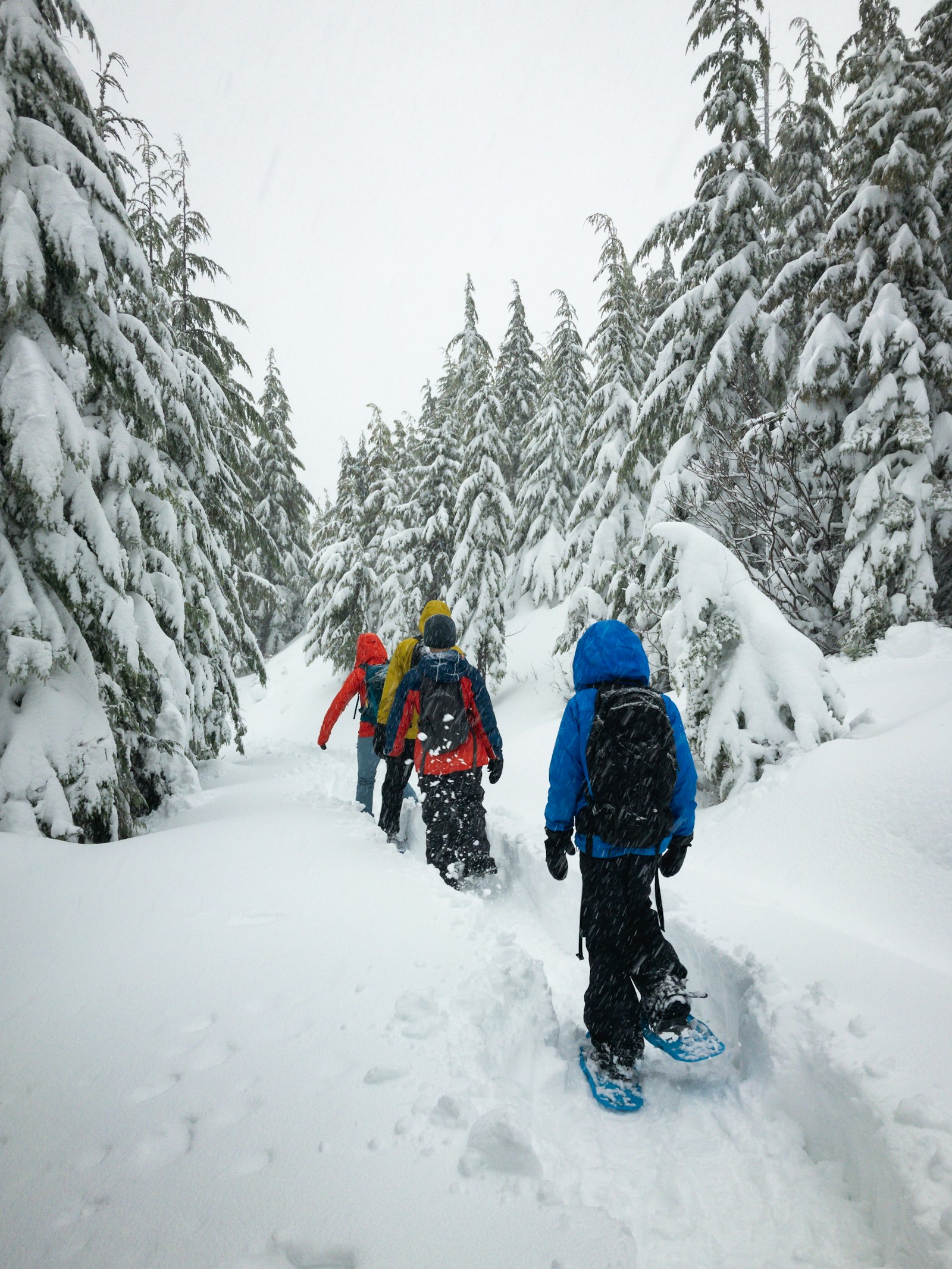
Winter makes familiar paths look new and quiet. It also changes almost everything about a hike: days are short, paths disappear under snow, walking is slower and small mistakes matter more in the cold.
What changes in winter
- check_circleDaylight: plan much shorter days and keep a big margin before sunset.
- check_circleSpeed: walking in snow can take twice as long as in summer.
- check_circleNavigation: snow hides paths and waymarks; fog and white-out make it harder still.
- check_circleCold: stopping cools you quickly, and wet gloves or socks are hard to dry.
Clothes and gear
- check_circleWarm, waterproof boots and gaiters to keep snow out.
- check_circleLayers you can adjust, plus a thick insulated jacket for stops.
- check_circleA warm hat, spare gloves and a buff; goggles or sunglasses against glare.
- check_circleA thermos with a hot drink, and food you can eat with gloves on.
- check_circleA headlamp with fresh batteries, even for a short day.
Snowshoes, microspikes or crampons
- check_circleSnowshoes spread your weight on deep, soft snow, so you sink less.
- check_circleMicrospikes give grip on icy, packed paths and gentle slopes.
- check_circleCrampons are for steep snow and ice, need stiff boots that fit them, and should be learned on a course.
Walking on snowshoes
- check_circleWalk with your feet a little wider apart than usual so the frames don't hit each other.
- check_circleUphill, use the heel lifts if your snowshoes have them, and kick the front in on steep bits.
- check_circleDownhill, keep your weight slightly back and your knees soft.
- check_circleUse poles with snow baskets for balance.
Avalanches
Avalanches can happen on slopes steeper than about 30 degrees, and can run far into the flat ground below them. Before every winter trip, read the local avalanche bulletin, which rates the danger from 1 (low) to 5 (very high).
Without avalanche training and equipment (transceiver, probe and shovel), stay on gentle terrain well away from steep slopes and the gullies below them. When in doubt, choose a forest walk or a groomed winter trail.
Start with a route you know from summer. Seeing it in snow shows you how much slower and harder winter is.
Look after each other
- check_circleWatch for early signs of hypothermia and frostnip in the group.
- check_circleKeep your phone warm in an inside pocket; cold drains it fast.
- check_circleTurn back early: in winter it is much easier than coping in it.

In Pathsie you can see the forecast at your start point, share live location with the people at home and use GPS Mode to find your way back if snow hides the path.
verifiedSources
This guide is based on the advice of these organisations.
- Mountaineering Scotland — ThinkWinteropen_in_new
- WSL Institute for Snow and Avalanche Research SLF — Avalanche bulletinopen_in_new
- NHS — Hypothermiaopen_in_new
- U.S. National Park Service — Hike Smartopen_in_new
This guide is general information, not a substitute for training. Learn these skills on a course or with an experienced guide before relying on them.