Bears, dogs and other wildlife encounters
Most animals avoid people. How to avoid surprising them, what to do if you meet a bear, a big cat, a guard dog or cattle, and when to fight back.
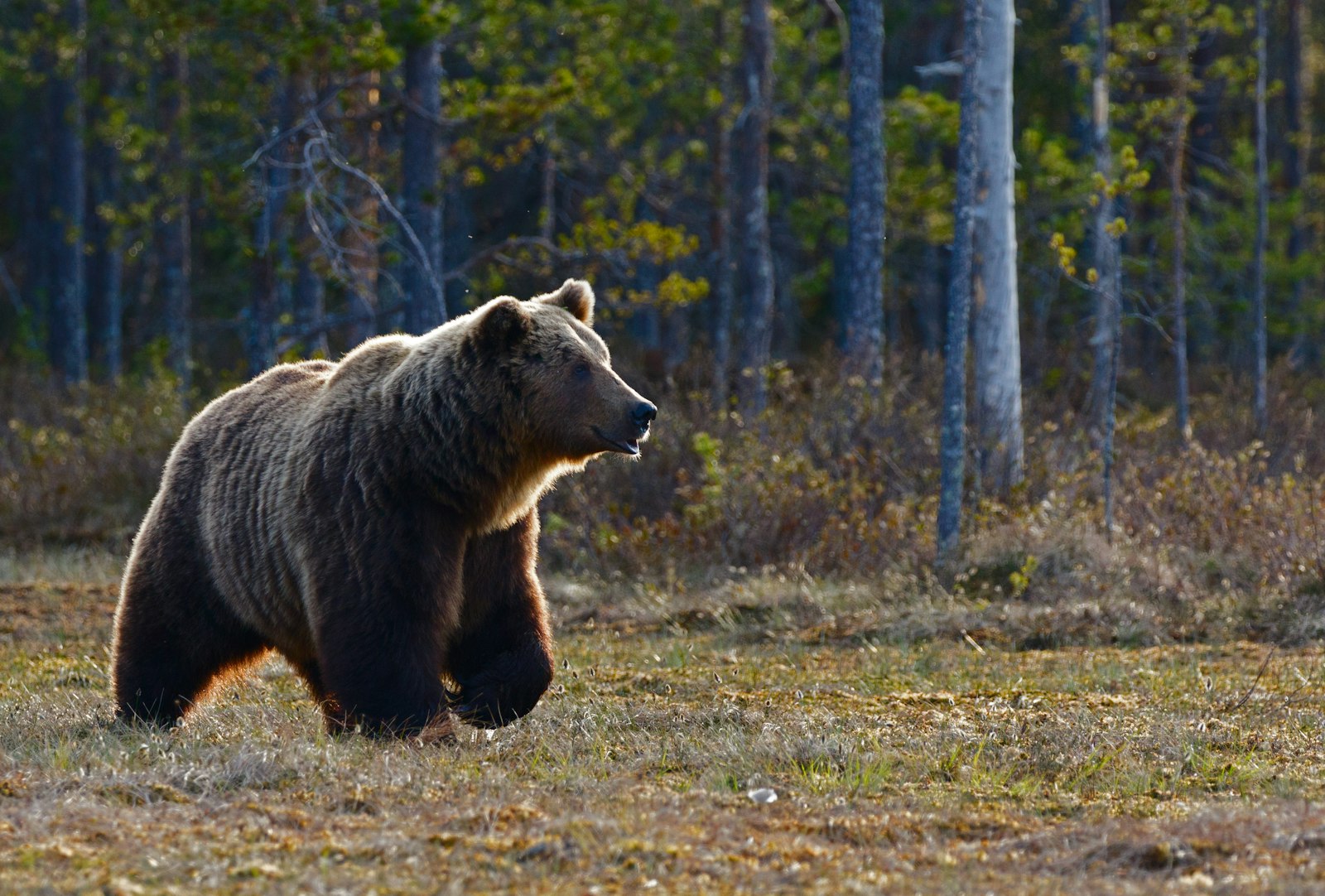
Seeing wild animals is one of the joys of being outdoors, and serious encounters are rare. Most problems start with a surprise or with food. Knowing what to do keeps both you and the animal safe.
Avoid surprises
- check_circleTalk or make noise on paths with poor visibility, near streams and in dense vegetation.
- check_circleWalk in a group and keep children close.
- check_circleKeep dogs on a lead in wildlife areas.
- check_circleWatch for signs: fresh tracks, droppings, carcasses. Leave the area if you find a carcass.
Food and camps
Animals that get human food lose their fear and often have to be removed. Never feed wildlife. Store food, rubbish and anything with a smell as the local rules say: in bear-resistant containers, lockers or hung away from the tent. Cook and eat away from where you sleep.
If you see a bear
- check_circleStay calm and do not run; bears can run much faster than people.
- check_circleTalk in a calm, low voice so it knows you are a person, and back away slowly.
- check_circleGroup together and make yourselves look bigger. Pick up small children.
- check_circleGive it a way to leave, and never get between a mother and her cubs.
- check_circleWhere bear spray is recommended, carry it where you can reach it, and learn how to use it before the trip.
If a bear attacks
- check_circleBrown or grizzly bear defending itself or its cubs: play dead. Lie on your stomach, hands behind your neck, legs apart, and keep your pack on. Stay still until it leaves.
- check_circleBlack bear: do not play dead. Try to escape to a safe place, or fight back hard, aiming at the face and nose.
- check_circleAny bear that stalks you or attacks in your tent: fight back with everything you have.
Big cats
If you meet a mountain lion or similar large cat, do not run and do not crouch. Stand tall, look at it, make yourself big, speak firmly and back away slowly. If it attacks, fight back.
Guard dogs and cattle
- check_circleLivestock guard dogs protect their herd. Slow down, give the herd a wide berth and do not walk through it.
- check_circleDo not run, stare or threaten the dogs. Keep a pole or your pack between you and them and walk calmly away.
- check_circleCows with calves can be protective. Give them space and do not walk between a cow and its calf.
- check_circleIf cattle chase you and you have a dog, let the dog go: they usually follow the dog.
Never approach, feed or photograph a wild animal at close range. If an animal changes its behaviour because of you, you are too close.
Ask the local park or tourist office which animals live in the area and what they recommend. Advice differs between regions and species.

Share your live location with someone at home from Pathsie, and keep your emergency contacts saved so an SOS reaches them in one tap.
verifiedSources
This guide is based on the advice of these organisations.
- U.S. National Park Service — Staying safe around bearsopen_in_new
- Parks Canada — Bears in the mountain national parksopen_in_new
- U.S. National Park Service — Mountain lion safetyopen_in_new
This guide is general information, not a substitute for training. Learn these skills on a course or with an experienced guide before relying on them.