Sleeping bag and sleeping pad: staying warm at night
What the numbers on a sleeping bag and a pad mean, and why you should choose them together.
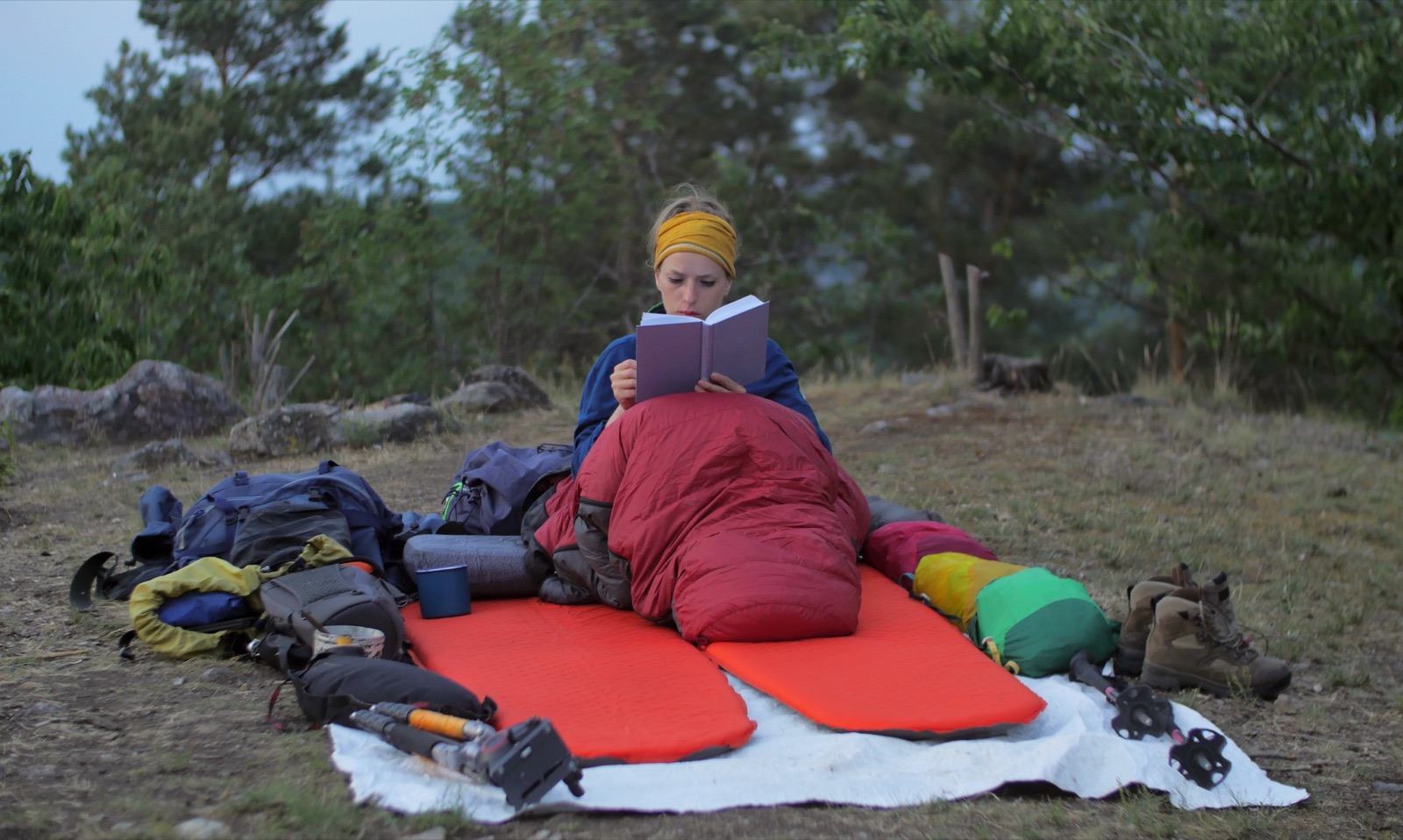
You lose heat in two directions at night: up into the air and down into the ground. The bag deals with the first, the pad with the second. People who sleep cold in a good bag are very often lying on a pad that is too thin.
The numbers on a sleeping bag
Most bags sold in Europe are lab-tested to the ISO 23537 standard, which replaced the older EN 13537. The label shows up to three temperatures:
- check_circleComfort: for someone who feels the cold, lying relaxed.
- check_circleLimit: for someone who sleeps warm, curled up. Below this you will start to feel cold.
- check_circleExtreme: a survival figure for a few hours, not a sleeping temperature. Ignore it when buying.
The figures assume a dry bag, a layer of base clothing and a well-insulated pad. A damp bag or a thin pad makes them optimistic. A single number without "comfort" or "limit" next to it is usually the maker's own estimate.
Look up the lowest night temperature where you are going and leave yourself a margin of a few degrees. If you get cold easily, compare that night with the comfort figure rather than the limit.
Down or synthetic filling
- check_circleDown gives the most warmth for its weight, packs small and lasts for years with care. Wet down loses most of its loft, so keep it dry; water-resistant down narrows the gap.
- check_circleSynthetic filling costs less and still insulates when damp, which suits wet climates, but it weighs more and takes more space in the pack.
Shape matters too: a tapered mummy bag with a hood leaves less empty space to warm up than a rectangular one, so it is warmer for the same weight.
The pad and its R-value
The R-value says how well a pad blocks the cold coming up from the ground; the higher, the warmer. Since a shared test method (ASTM F3340) was introduced, values from different brands can be compared directly. The test only measures warmth, not comfort or durability.
- check_circleBelow 2: warm summer nights.
- check_circle2 to 3.9: cool nights on most spring-to-autumn trips.
- check_circle4 to 5.4: cold nights, and early spring when the ground is still cold.
- check_circle5.5 or more: winter and snow.
Two pads add up. A thin foam pad (usually around R2) under an inflatable one makes a warm combination that still works if the inflatable gets a puncture.
Kinds of pad
- check_circleFoam: cheap, almost indestructible and quick to lay down, but bulky and the least warm on its own.
- check_circleSelf-inflating: open foam inside an airtight shell; comfortable and warm, heavier than air pads.
- check_circleAir pads: the most comfort for the least weight and space. Take the repair patches with you.

Check the night-time low at your campsite in Pathsie's trip weather before you pack.
verifiedSources
This guide is based on the advice of these organisations.
- ISO 23537-1:2022 — Sleeping bags, thermal and dimensional requirementsopen_in_new
- outdoor-magazin.com — So findest du den richtigen Schlafsackopen_in_new
- SectionHiker — The new sleeping pad R-value standard (ASTM F3340)open_in_new
- REI Expert Advice — Sleeping pads: types and R-valueopen_in_new
This guide is general information, not a substitute for training. Learn these skills on a course or with an experienced guide before relying on them.