Basic first aid on the trail
Bleeding, sprains, heat illness and blisters: what to do in the first minutes, and when to call for help.
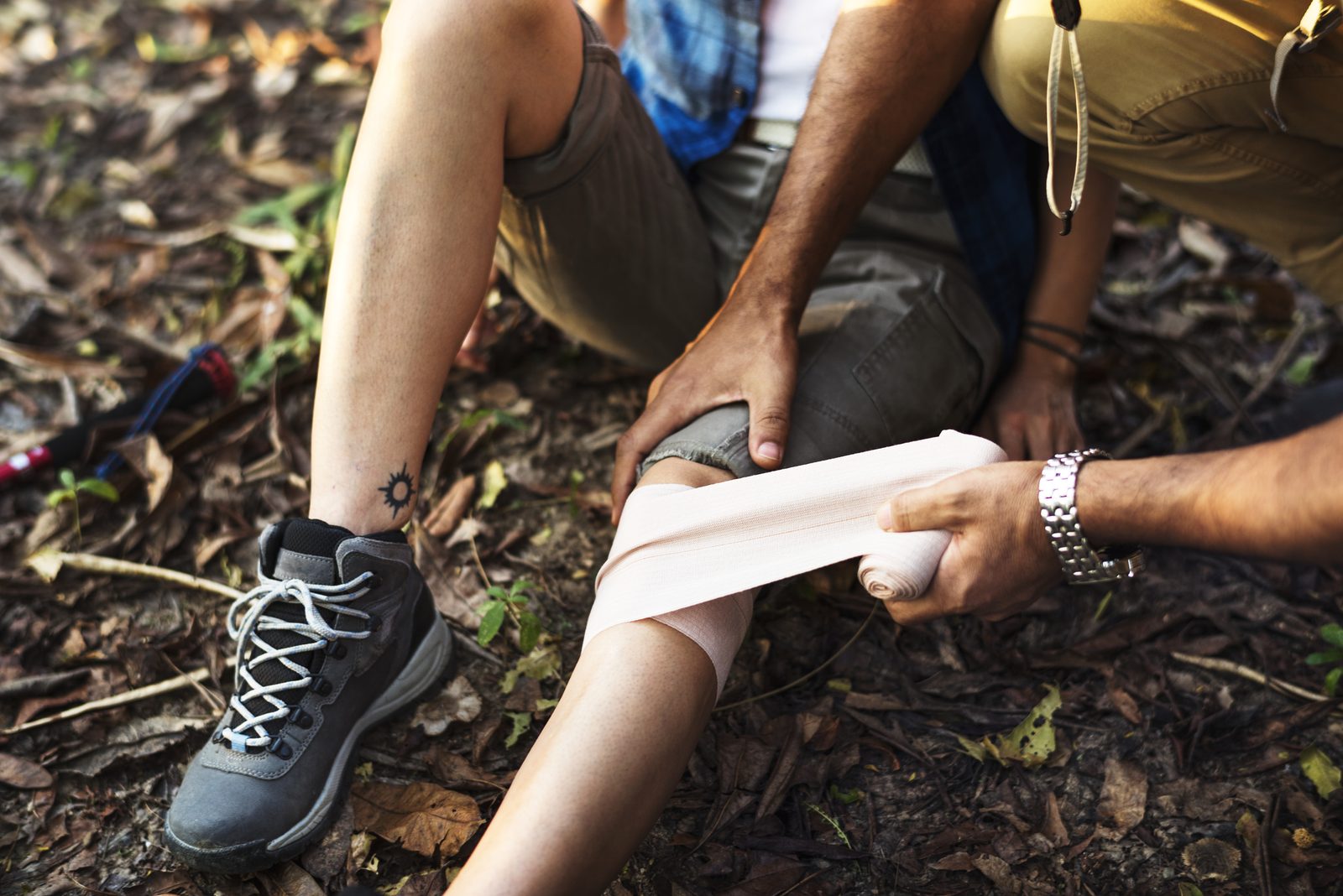
Most trail injuries are small, but far from a road even small ones matter. Make sure the scene is safe, check the person, and call the emergency number early if it is serious.
Heavy bleeding
- check_circlePress firmly on the wound with whatever you have — a dressing, a cloth, your hand. Pressure helps the blood clot.
- check_circleCall the emergency number, and keep the pressure on until help arrives.
- check_circleIf blood soaks through, replace the pad with a fresh one and keep pressing.
- check_circleDo not pull out anything stuck in the wound; press around it.
- check_circleIf they turn pale, cold and dizzy, lie them down, raise their legs and keep them warm.
Sprains and strains
- check_circleProtect and rest the injury; do not put weight on it.
- check_circleCool it with cold water or snow wrapped in cloth, up to 20 minutes at a time.
- check_circleSupport it with a bandage and keep it raised when you stop.
A crack at the moment of injury, a limb at an odd angle, numbness or skin turning blue or grey may mean a broken bone. Do not walk on it — call for help.
Heat exhaustion and heatstroke
- check_circleSigns: headache, dizziness, nausea, heavy sweating, cramps, great thirst.
- check_circleMove them into shade, remove extra clothing, give plenty of water or an electrolyte drink, and cool the skin with water and fanning.
- check_circleThey should feel better within 30 minutes.
If they are not better after 30 minutes, or are confused, have hot dry skin, a fast heartbeat or lose consciousness, it may be heatstroke. Call the emergency number and keep cooling them while you wait.
Blisters
Stop as soon as you feel a hot spot and cover it with tape or a blister plaster. Leave blisters unburst where you can; if one bursts, keep the skin on top and cover it with a clean dressing.
A small first aid kit — dressings, tape, a bandage, blister plasters, gloves, painkillers and any personal medicine — weighs very little. A first aid course teaches far more than any guide can.

Add a first aid kit to your Pathsie trip checklist, and keep your emergency contacts saved so I'm Safe and SOS can reach them in one tap.
verifiedSources
This guide is based on the advice of these organisations.
- British Red Cross — First aid for heavy bleedingopen_in_new
- NHS — Sprains and strainsopen_in_new
- NHS — Heat exhaustion and heatstrokeopen_in_new
- NHS — Blistersopen_in_new
This guide is general information, not a substitute for training. Learn these skills on a course or with an experienced guide before relying on them.